
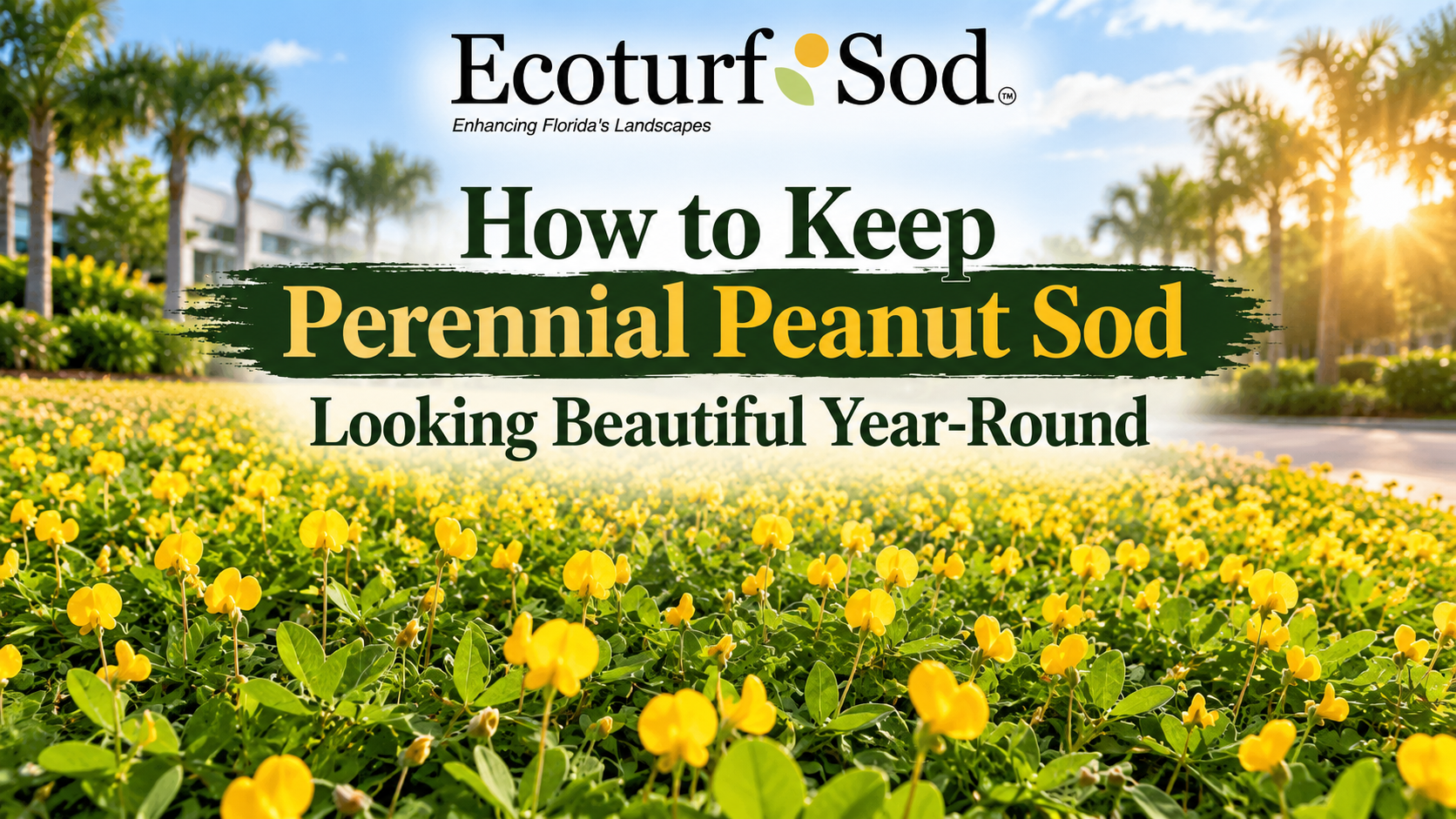
A beautiful lawn doesn’t have to mean constant mowing, excessive watering, and expensive fertilizer treatments. For Florida homeowners and commercial property owners looking for an attractive, low-maintenance landscaping solution, perennial peanut sod offers an excellent alternative to traditional turfgrass.
Known for its lush green foliage, vibrant yellow flowers, and ability to thrive in Florida’s warm climate, perennial peanut has become an increasingly popular choice for sustainable landscaping.
While perennial peanut requires less maintenance than many traditional grass varieties, proper care is still important for keeping it healthy and attractive throughout the year.
At EcoTurf Sod, we believe that understanding how to care for your landscape is just as important as choosing the right sod. Whether you’ve recently installed perennial peanut or are considering it for your property, these practical maintenance tips can help you enjoy a beautiful landscape throughout every season.
Understanding Perennial Peanut Sod
Perennial peanut (Arachis glabrata) is a warm-season perennial legume commonly used as an ornamental ground cover in Florida.
Unlike traditional turfgrass, perennial peanut spreads through underground stems called rhizomes, creating a dense carpet of attractive green foliage.
One of its most recognizable features is its small, bright yellow flowers, which typically appear during the warmer months when the plant is actively growing.
Perennial peanut offers several advantages for Florida landscapes, including:
- Excellent drought tolerance once established
- Reduced fertilizer requirements
- Minimal mowing compared to traditional lawns
- Attractive seasonal flowers
- Nitrogen-fixing capabilities
- Good adaptability to Florida’s sandy soils
- Potential reductions in long-term landscape maintenance
Although perennial peanut is relatively easy to maintain, its appearance changes with the seasons. Understanding these natural changes helps homeowners set realistic expectations and develop an effective care routine.
1. Water Perennial Peanut Properly Throughout the Year
Watering is one of the most important aspects of maintaining beautiful perennial peanut sod, especially during the establishment period.
Watering Newly Installed Perennial Peanut Sod
Newly installed sod requires consistent moisture while its roots and rhizomes establish themselves in the surrounding soil.
During the initial establishment period, the soil beneath the sod should remain evenly moist without becoming waterlogged.
Depending on temperature, rainfall, and soil conditions, this may require frequent light irrigation initially, followed by less frequent, deeper watering as roots develop.
Check moisture beneath the sod rather than relying on a fixed watering schedule.
Watering Established Perennial Peanut
Once established, perennial peanut becomes significantly more drought-tolerant than many conventional lawn grasses.
Its underground rhizome system allows it to survive periods of limited rainfall, making it especially valuable in Florida’s climate.
However, drought tolerance doesn’t mean the plant will always maintain its best appearance without water.
Extended dry periods may cause slower growth, reduced flowering, or temporary foliage decline.
Occasional deep irrigation during prolonged drought can help maintain an attractive landscape.
Avoid excessive watering, which can contribute to drainage problems and unnecessary water consumption.
Maintenance Tip: Water based on soil moisture, recent rainfall, and plant appearance rather than following the same irrigation schedule every week.
2. Take Advantage of Perennial Peanut’s Low-Mowing Requirements
One of the biggest advantages of perennial peanut sod is its minimal mowing requirement.
Traditional Florida lawns often need weekly mowing during the growing season. Perennial peanut generally requires much less frequent trimming.
Its naturally low-growing habit makes it suitable for homeowners who want a neat landscape without constant lawn maintenance.
When Should You Mow Perennial Peanut?
Mowing frequency depends on the variety, growing conditions, and desired appearance.
Some ornamental perennial peanut varieties remain compact and may need little or no routine mowing.
Others may benefit from occasional trimming to maintain a uniform height or remove excessive growth.
If mowing is necessary, avoid cutting the plants excessively short. Removing too much foliage can temporarily reduce flowering and slow recovery.
Keep mower blades sharp to prevent unnecessary plant damage.
For landscaped areas where perennial peanut is used around trees, walkways, or garden beds, occasional edging may be more important than mowing.
3. Understand Seasonal Changes in Perennial Peanut
Florida’s changing seasons influence how perennial peanut grows, flowers, and maintains its appearance.
Although the state enjoys relatively mild winters, perennial peanut is still a warm-season plant.
Its growth naturally slows when temperatures decrease.
Spring: Encourage Healthy New Growth
Spring is an important period for perennial peanut as temperatures rise and active growth resumes.
Depending on the severity of winter weather, the plants may begin producing fresh green foliage as the soil warms.
Spring maintenance should include removing accumulated leaves and debris, inspecting for winter damage, and checking irrigation systems.
If bare areas developed during winter, give the plants time to recover before assuming they need replacement.
Established perennial peanut can regenerate from healthy underground rhizomes.
Summer: Enjoy Peak Growth and Flowering
Summer is typically the most active growing season for perennial peanut in Florida.
Warm temperatures, sunshine, and adequate moisture encourage vigorous foliage development and abundant yellow flowers.
During this period, monitor the landscape for weeds, drainage problems, and signs of prolonged drought.
Because Florida summers can bring heavy afternoon thunderstorms, avoid unnecessary irrigation when rainfall is sufficient.
Fall: Prepare for Cooler Weather
As temperatures begin to decrease, perennial peanut growth gradually slows.
Flowering may become less frequent, and some plants may begin losing their vibrant summer appearance.
Fall is a good time to remove debris, control weeds, and inspect drainage conditions.
Avoid aggressive trimming late in the season, particularly when colder weather is approaching.
Winter: Expect Some Dormancy
One of the most important things homeowners should understand is that perennial peanut may not remain bright green throughout winter.
In areas of Florida that experience frost or freezing temperatures, perennial peanut can enter dormancy and lose much of its aboveground foliage.
The plants may appear brown or sparse even though their underground rhizomes remain alive.
In warmer coastal and southern locations, perennial peanut may retain more foliage during mild winters.
Winter dormancy is a normal part of the plant’s growth cycle and doesn’t necessarily indicate a problem.
Healthy, established plants generally resume growth when favorable temperatures return.
4. Avoid Overfertilizing Your Perennial Peanut Sod
Traditional lawns often require regular nitrogen fertilizer applications to maintain their green appearance.
Perennial peanut is different.
As a legume, perennial peanut can form a beneficial relationship with soil bacteria that convert atmospheric nitrogen into a form the plant can use.
This natural nitrogen-fixing ability reduces the need for supplemental nitrogen fertilizer.
In many established landscapes, routine nitrogen fertilization is unnecessary.
Applying excessive nitrogen may encourage unwanted weeds and create additional maintenance concerns.
However, perennial peanut still requires other essential nutrients.
Phosphorus, potassium, and certain micronutrients may be needed depending on soil conditions.
The best approach is to conduct a soil test before applying fertilizer.
A soil analysis can help identify actual nutrient deficiencies and prevent unnecessary applications.
For Florida property owners, the University of Florida IFAS Extension provides useful resources for soil testing and landscape management.
5. Keep Weeds Under Control
Although established perennial peanut can create dense ground coverage, weeds may become a problem when the sod is newly installed or growing slowly.
Open spaces between plants provide opportunities for unwanted vegetation to establish.
Preventing Weeds During Establishment
New perennial peanut sod should be monitored regularly for emerging weeds.
Removing weeds early helps prevent competition for sunlight, water, and nutrients.
Hand-pulling may be practical for small landscaped areas.
For larger properties, consistent monitoring and appropriate weed-management practices are important.
Maintaining Established Sod
Once perennial peanut forms dense coverage, it can help suppress some weed growth by limiting available space and sunlight.
However, no ground cover is completely weed-proof.
Avoid applying conventional lawn herbicides without confirming that the product is specifically labeled for use on ornamental perennial peanut.
Some herbicides commonly used on turfgrass can severely damage or kill perennial peanut.
When in doubt, consult a qualified landscape professional or local Extension office.
6. Make Sure Your Landscape Has Proper Drainage
Perennial peanut performs best in well-drained soil.
Although it tolerates dry conditions once established, prolonged waterlogging can create problems for its root and rhizome systems.
Florida properties with compacted soil, low-lying areas, or poor drainage may experience standing water after heavy rainfall.
Excessive moisture can contribute to declining plant health and create conditions favorable for certain diseases.
To help maintain healthy perennial peanut:
- Avoid planting in areas that remain flooded for extended periods.
- Correct significant drainage problems before installation.
- Prevent irrigation systems from repeatedly oversaturating the soil.
- Monitor low spots after heavy storms.
- Reduce soil compaction where practical.
Proper site preparation can make a significant difference in long-term landscape performance.
7. Give Perennial Peanut Plenty of Sunlight
Sunlight is another important factor in keeping perennial peanut sod looking beautiful.
Perennial peanut generally performs best in full sun, where it can develop dense foliage and produce abundant flowers.
Areas receiving insufficient sunlight may experience thinner growth, reduced flowering, and increased weed competition.
If you’re considering perennial peanut for a property with mature trees or shaded buildings, evaluate how much direct sunlight the area receives throughout the day.
Some locations with partial shade may support growth, but dense shade is generally unsuitable.
For heavily shaded areas, a different ground cover may provide better results.
Choosing the right planting location from the beginning can reduce future maintenance problems.
8. Limit Heavy Foot Traffic
Perennial peanut is an attractive ornamental ground cover, but it shouldn’t automatically be treated as a direct replacement for turfgrass in every situation.
Traditional lawn grasses are often selected for their ability to tolerate repeated walking, running, and recreational activities.
Perennial peanut is better suited to areas with light or occasional foot traffic.
Repeated heavy traffic can damage foliage, compact soil, and create bare patches.
For properties with children, pets, or frequently used outdoor gathering spaces, consider incorporating designated pathways or traditional turf areas where appropriate.
Perennial peanut can be especially attractive in front yards, landscaped borders, sunny open spaces, and areas where appearance and low maintenance are priorities.
9. Watch for Pests and Plant Health Problems
Perennial peanut is generally considered a relatively low-maintenance ground cover, but it isn’t completely immune to pests or disease.
Occasional insect feeding, unusual discoloration, or declining growth may occur.
Inspect your landscape periodically for changes such as yellowing foliage, damaged leaves, thinning patches, or unexpected plant decline.
Remember that some symptoms may result from environmental stress rather than insects or disease.
Poor drainage, excessive shade, nutrient deficiencies, and prolonged drought can all affect plant appearance.
Identifying the actual cause before applying pesticides or fertilizer helps avoid unnecessary treatments.
10. Choose Quality Sod for Long-Term Success
Keeping perennial peanut beautiful year-round starts with choosing healthy sod and installing it correctly.
Quality sod should be established, appropriately handled, and installed on properly prepared soil.
Poor installation practices can create long-term problems, including uneven coverage, weak establishment, and increased weed pressure.
Working with a knowledgeable supplier can help you select the appropriate perennial peanut product and understand its maintenance requirements.
At EcoTurf Sod, we focus on providing ornamental perennial peanut sod as a sustainable landscaping option for Florida properties.
Whether you’re planning a residential landscape renovation or a larger commercial project, choosing the right sod is an important first step.
Frequently Asked Questions About Perennial Peanut Sod Maintenance
Does perennial peanut stay green all year in Florida?
Not necessarily. Perennial peanut is a warm-season plant that may turn brown or lose foliage during cold weather, particularly after frost. It generally returns to active growth when temperatures warm in spring.
How often should perennial peanut sod be watered?
New sod requires consistent moisture during establishment. Once established, perennial peanut is drought-tolerant and generally needs less supplemental irrigation, although occasional watering during extended dry periods can improve its appearance.
Does perennial peanut need to be fertilized?
Established perennial peanut usually requires little or no supplemental nitrogen fertilizer because of its nitrogen-fixing ability. Other nutrients may be necessary if soil testing identifies deficiencies.
Can perennial peanut be mowed like regular grass?
Yes, some varieties can tolerate occasional mowing, but they typically require much less frequent cutting than traditional turfgrass. Mowing needs depend on the variety and desired appearance.
Why is my perennial peanut turning brown?
Browning can result from winter dormancy, drought stress, drainage problems, or other environmental conditions. Seasonal browning after frost is often normal, while unexpected decline during warm weather may require further investigation.
Enjoy a Beautiful, Low-Maintenance Landscape with EcoTurf Sod
Maintaining an attractive landscape doesn’t have to involve endless mowing, frequent fertilizer applications, or excessive irrigation.
With proper establishment, occasional maintenance, and an understanding of its seasonal growth patterns, perennial peanut sod can provide a beautiful and environmentally responsible ground cover for Florida properties.
The key is recognizing that perennial peanut behaves differently from traditional lawn grass. Its drought tolerance, nitrogen-fixing capabilities, attractive yellow flowers, and low-maintenance growth habit make it an appealing choice for homeowners and commercial landscapers.
While seasonal dormancy may temporarily change its appearance, healthy perennial peanut can return with lush foliage and colorful blooms when warmer weather arrives.
At EcoTurf Sod, we’re proud to help Florida property owners discover the benefits of ornamental perennial peanut sod.
Ready to transform your landscape with a sustainable, attractive alternative to traditional grass?
Visit EcoTurfSod.com to learn more about our perennial peanut sod and explore options for your next landscaping project.
